
IntroToCryptos.ca
Is This The Capitulation Low in Bitcoin?
Bitcoin bounced, but my rules still call it a Watch. I compare nested 1-2-3 formations with two altcoin baskets to avoid chasing a false bottom.

How many times have you watched the first big green candle after a hard selloff, told yourself the bottom was in, and then had to sit through another drop?
I have done it more times than I care to count. I would see a small bounce, get excited, and enter before the chart had finished making its case. The next lower low usually cured that excitement.
Today’s question isn’t whether Bitcoin has bottomed. It is whether the smaller reversal patterns can grow into a confirmed trend change without me jumping ahead of my rules.
The first bounce is not the same as a bottom
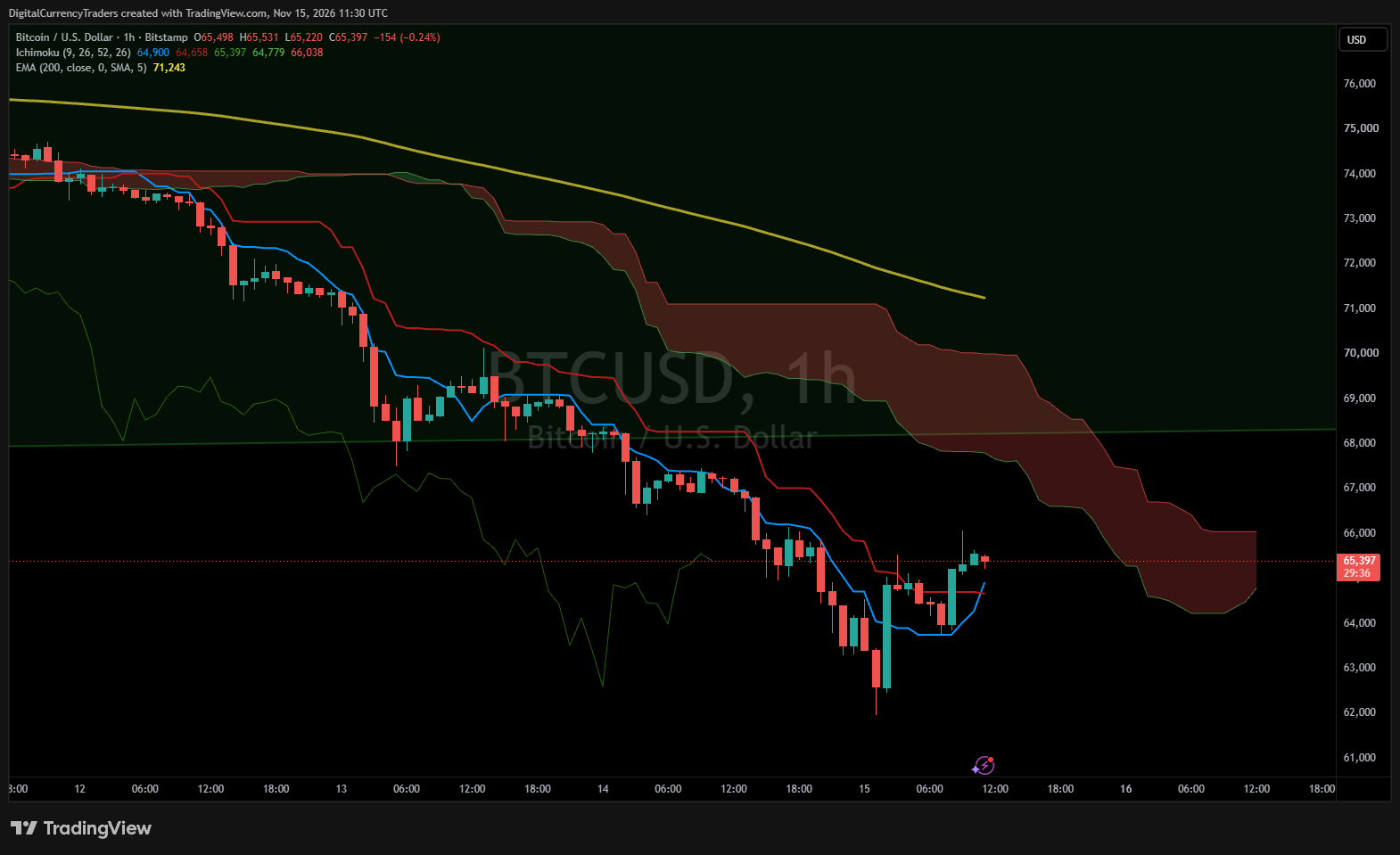
On November 15, Bitcoin is around $65,400 on the hourly chart after a steep run down from above $74,000. Price is still below the 200 EMA, near $71,243, and the Ichimoku cloud remains overhead.
There has been a rebound from the recent low. But the larger hourly chart has not cleared the bearish structure. An early bounce and a completed reversal are two very different things.
What Bitcoin dominance adds to the picture
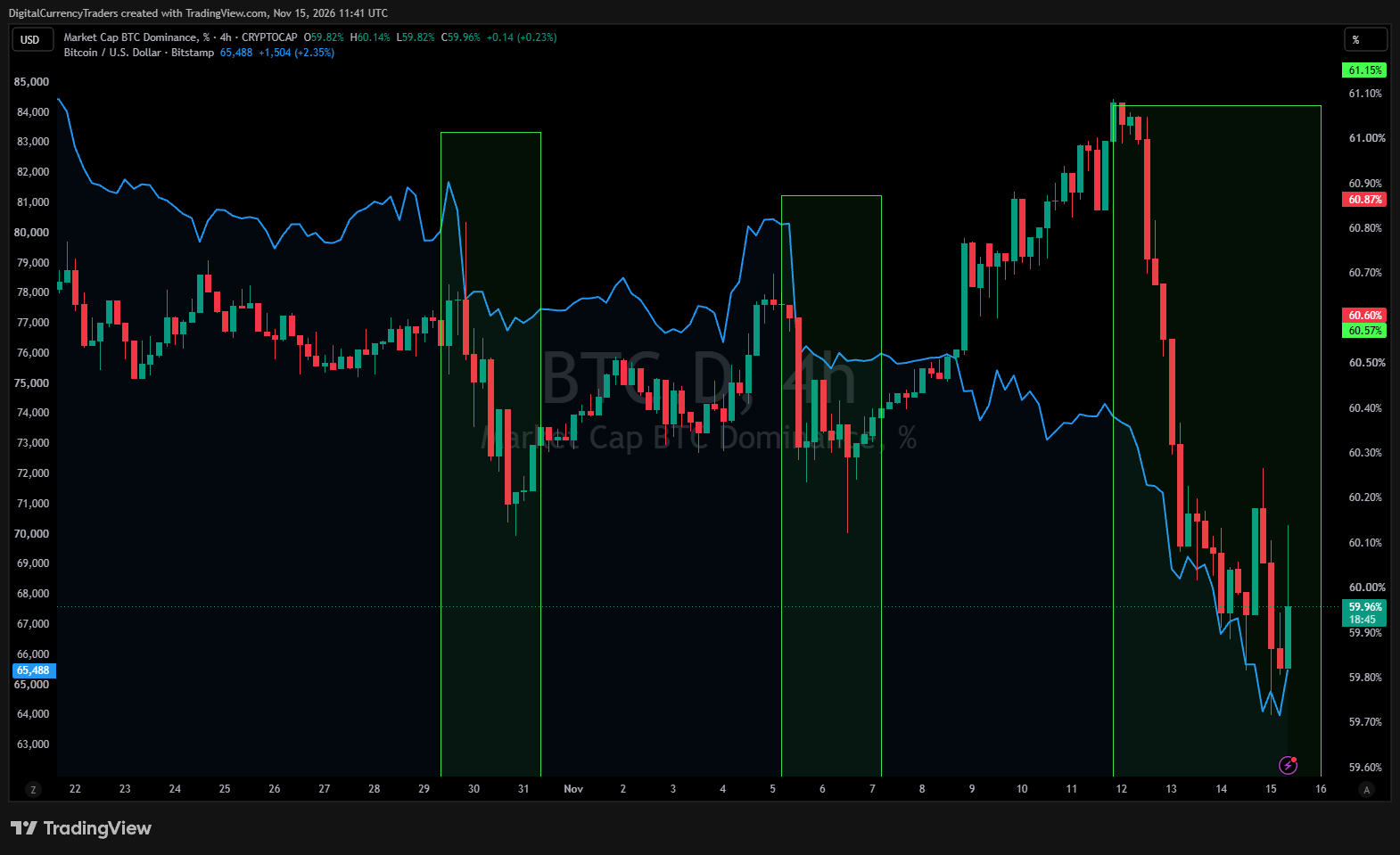
While Bitcoin was falling, its share of the crypto market also dropped sharply. In the four-hour comparison, dominance falls toward 59.95%. That means the combined altcoin market is holding up better relative to Bitcoin over this part of the move. It does not tell me which coin will lead, or prove that money literally moved from BTC into alts.
Yesterday I focused on why some individual ALT/BTC ratios can improve during a selloff. Today that is background evidence, not the main trade decision. My bigger problem is deciding when a bounce has actually earned my trust. I explain the broad market-share lens in my Bitcoin dominance guide.
The little 1-2-3s are trying to stack
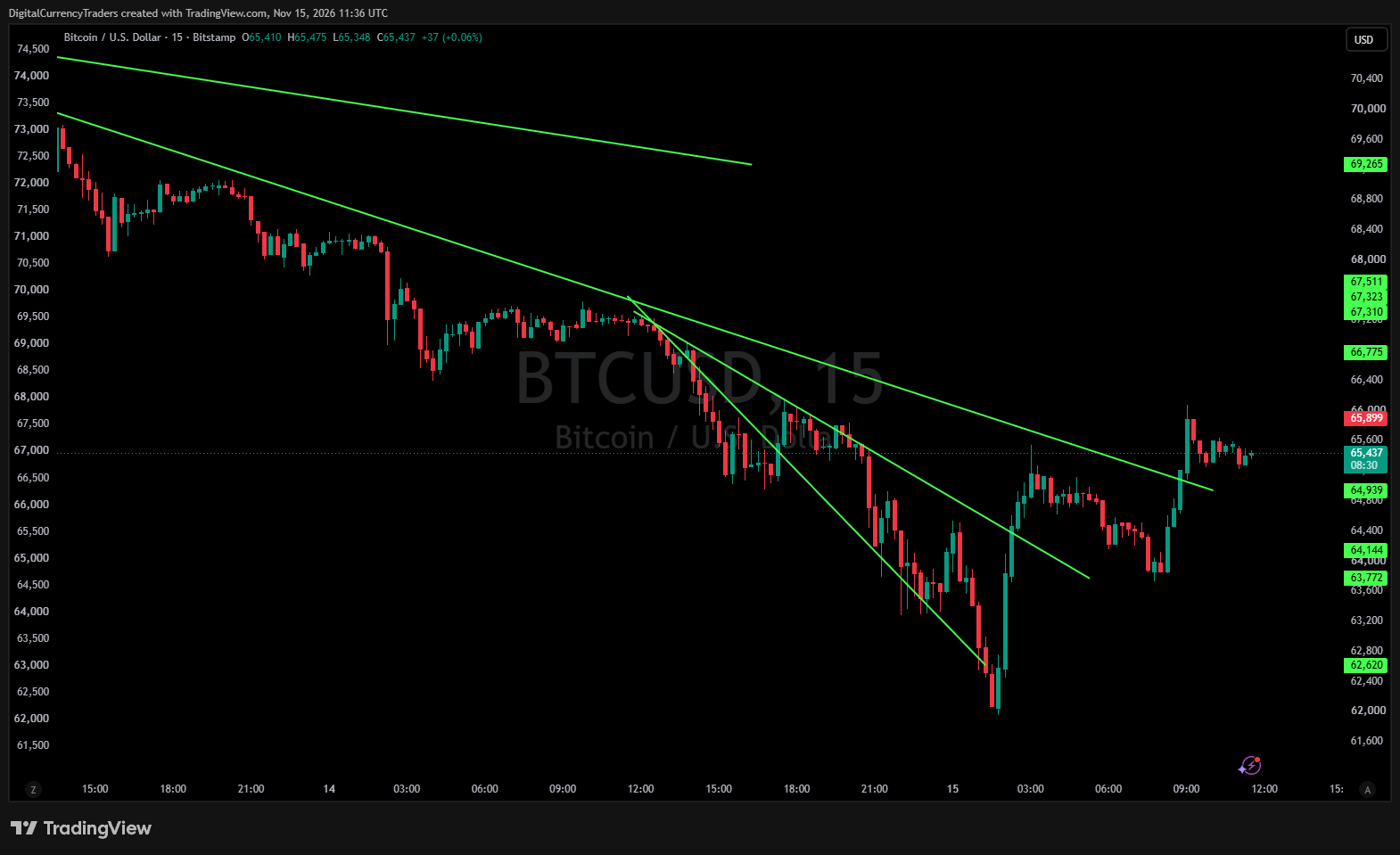
Zoom into the 15-minute Bitcoin chart and the change is easier to see. The steepest short-term downtrend line has been broken. A new bounce is developing above the recent low near $62,000.
That is the first piece of a possible base. I still want to see the next pullbacks, rallies and confirmation points. A small 1-2-3 can form inside a larger downtrend without changing that larger trend.
My manual teaching rules look for a downtrend-line break, a Point 2 break on the 1-2-3 reversal pattern, and an EMA cross up. They confirm different parts of the same change. I cannot confirm all three on the larger Bitcoin setup from these screenshots.
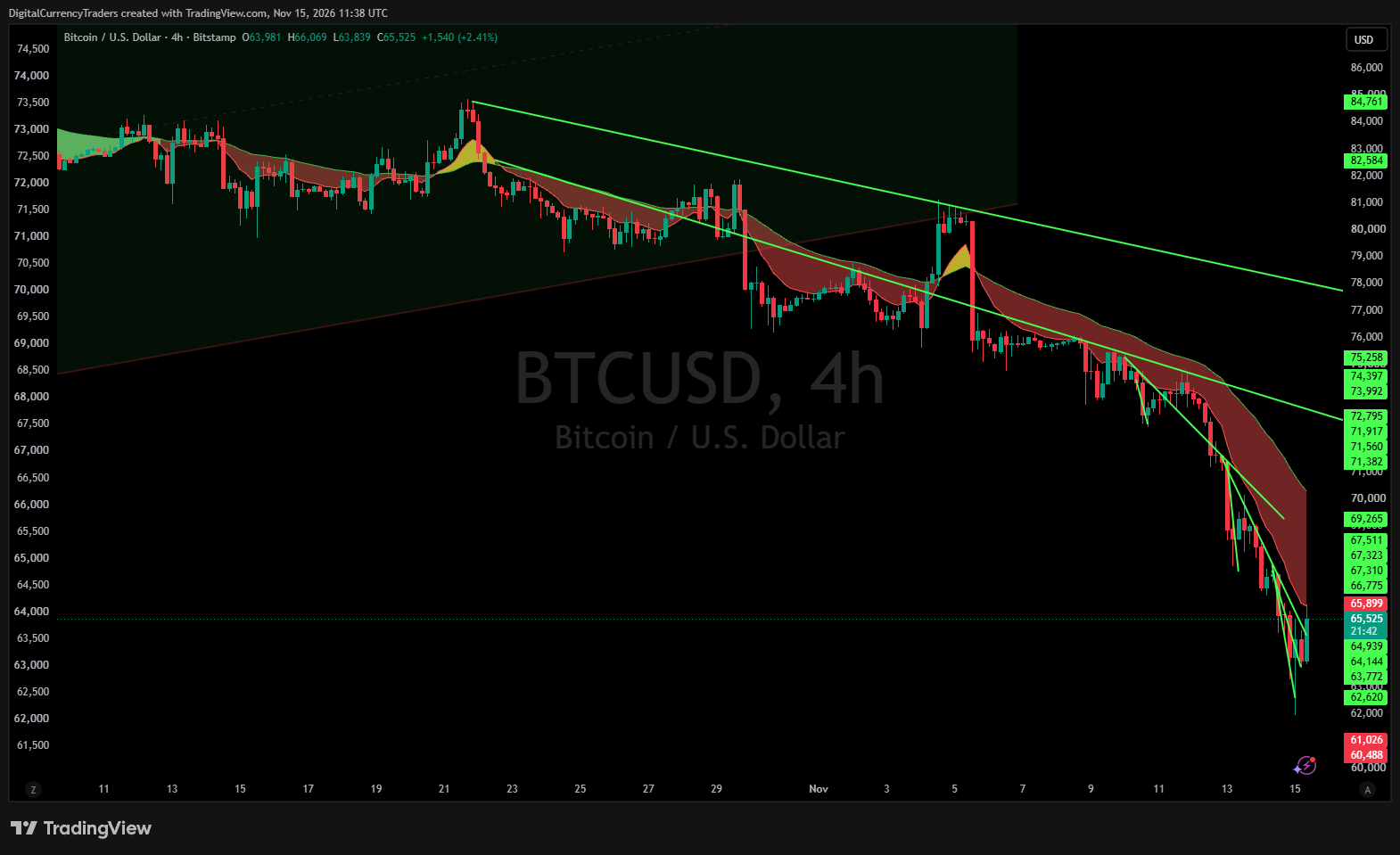
Signal check: Short-term trendline pressure has eased; a larger confirmed 1-2-3 bottom is not established here; the required EMA confirmation is not visible. My stage for this Bitcoin setup is Watch, not a declared Entry.
Here’s the patience test I used to fail
When I traded by feel, I thought waiting meant losing my chance. I would watch each candle, change my mind three times, and finally act because I was tired of waiting.
The market did not owe me a clean bottom. In my experience, roughly eight out of ten 1-2-3 setups used on their own failed. That is why I stopped treating the first shape on the chart as an order.
The goal is to make the next decision smaller. Watch the structure. Let the signals develop. Follow the five stages of a trade instead of trying to buy the exact low.
The USD basket is still saying: mostly cash
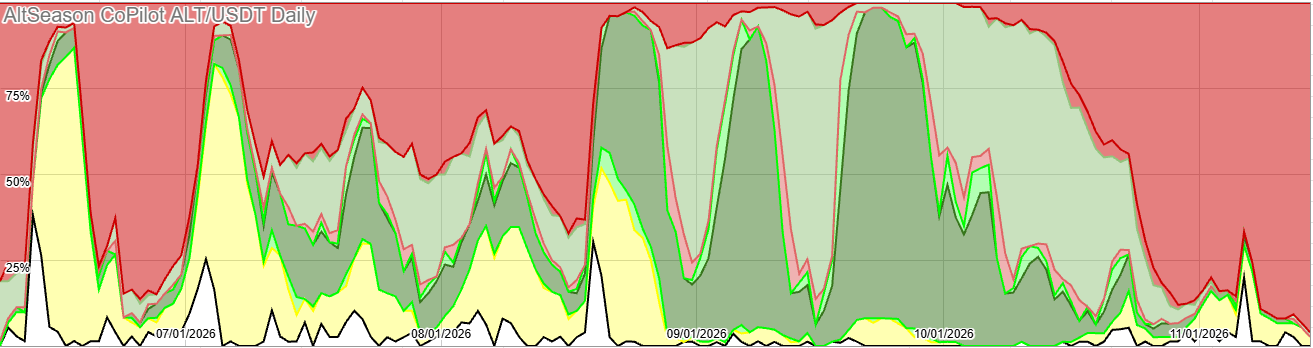
Now move from Bitcoin to my AltSeason CoPilot Daily Action Matrix. This first view covers the broader cycle in a roughly 70-coin ALT/USDT basket. Much of the green gave way to red as the market weakened. The basket largely moved into defensive statuses at the beginning of October.
That is important context. A bounce in one coin does not mean I must rebuild the whole portfolio.
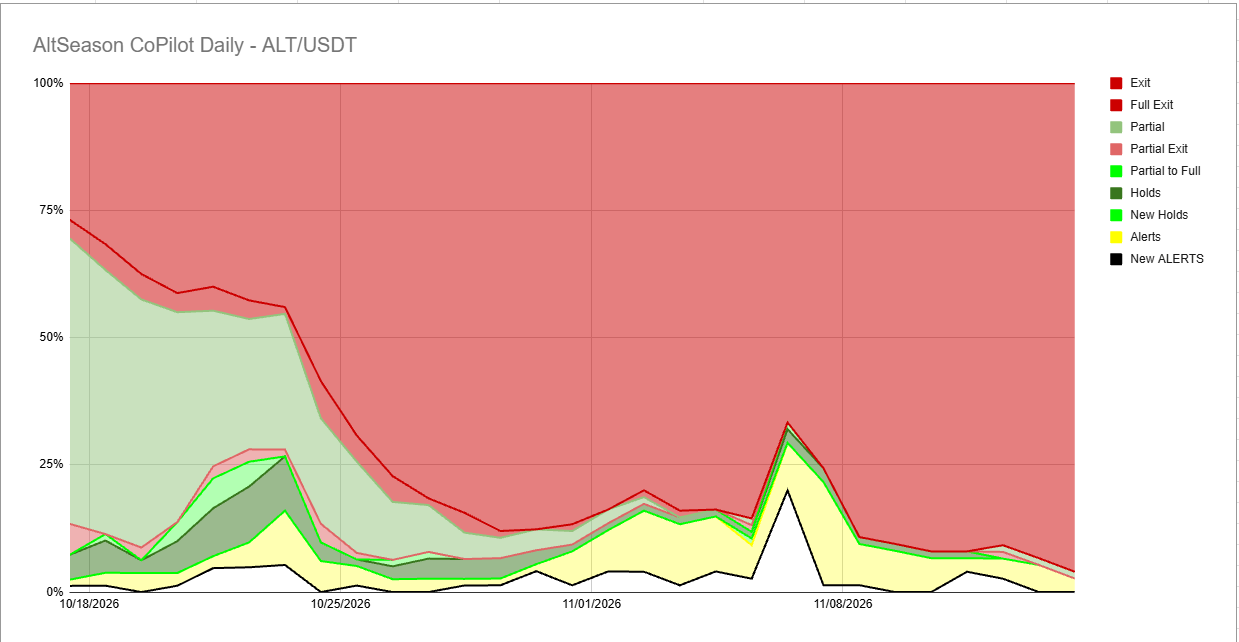
The closer 30-day view reinforces that point. Near the right edge, Exit still dominates. Holds and Alerts are only a narrow slice. CoPilot is my manually acted-on USD lens: I review the Daily Action Matrix and make my own decisions rather than assuming every early alert deserves a position.
The second basket does not have to agree
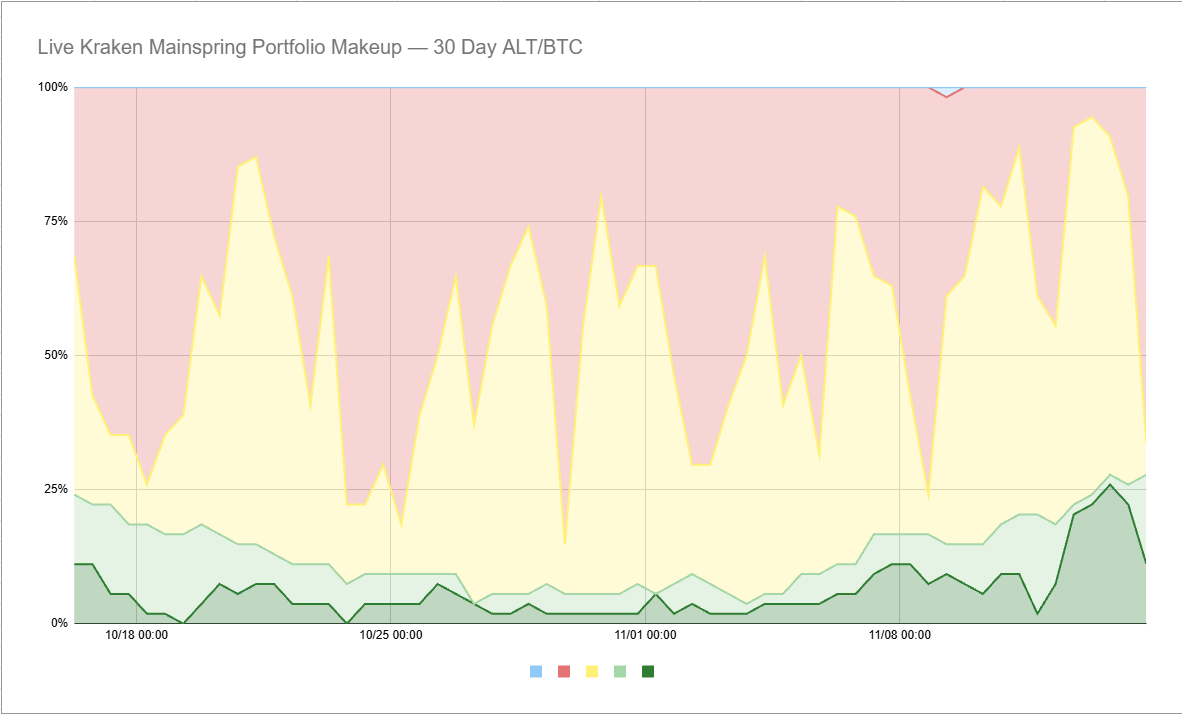
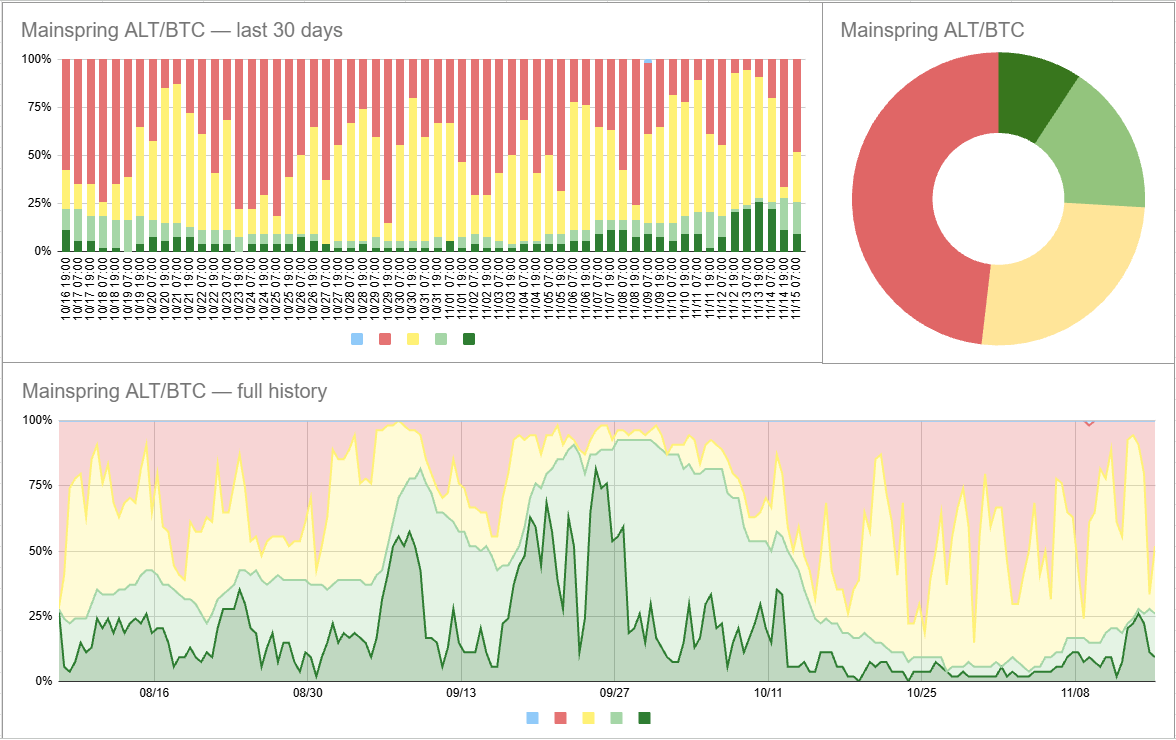
My Mainspring Portfolio Manager follows about 60 selected ALT/BTC ratios in this view. Its chart shows a different distribution of states, because its question is different: which coins are holding up against Bitcoin?
The automation uses each coin’s EMA cross on its synthetic ALT/BTC ratio. Prices refresh hourly; completed signals and trades are checked every 12 hours. It does not execute my trendline drawings or the 1-2-3 pattern.
So the two views can disagree without either being broken. CoPilot can remain mostly defensive against dollars while the Portfolio Manager finds a few relative-strength opportunities against BTC. Those positions can still lose dollar value. The ratio is not protection from a falling market.
A diversified portfolio is built one tiny decision at a time
This last portfolio snapshot is the reminder.
Each coin has its own signal.
One early Hold does not turn the whole basket bullish. I want many small, independent opportunities, not one oversized bet on a story.
The long-tail idea needs the uncomfortable part too: while most trades churn, lose, or go nowhere – those fees and costs can be minimized and set in advance before the trade is opened. The few strong performers have no cap on the potential profits and that’s where our filter is positioned to make up for the cost of the churn. And when a setup fails, the rules are there to limit the damage – when the setup wins, the rules are there to let the full potential run.
That lesson took me a long time to learn. I have written about those early mistakes in my trading story.
What the rules say this morning
The Bitcoin chart is in full exit and we are watching for 1-2-3’s to nest.
AltSeason CoPilot ALT/USDT Daily Action Matrix
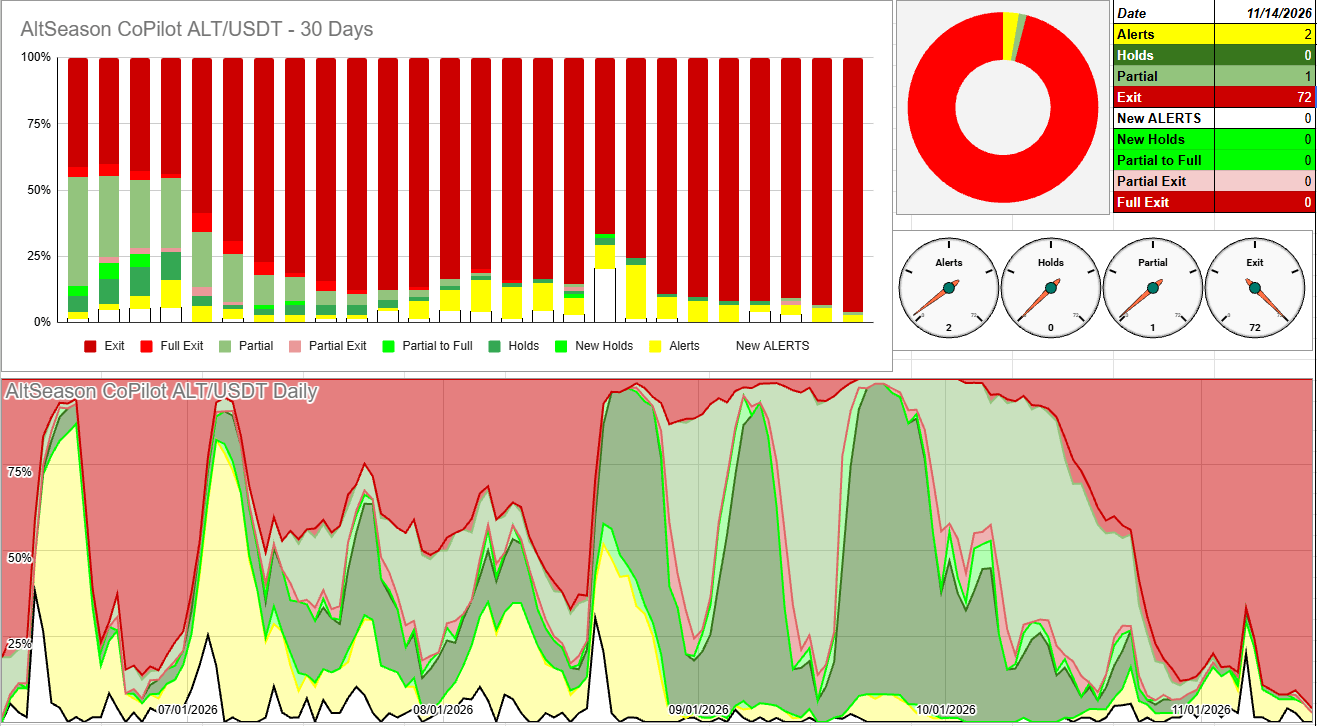
Mainspring ALT/BTC Automated Portfolio
If you already understand those differences and want to see how I’ve overcome my chart watching addiction, I explain the mechanical Mainspring Portfolio Manager here.
This is my system and my experience, not financial advice. Do your own research and manage your risk.
Trade safe, and keep those losses small. Cheers.
Discover more from introtocryptos.ca
Subscribe to get the latest posts sent to your email.


You must be logged in to post a comment.